
Can We Lower Greenhouse Gas Emissions from Our Own Home? Conclusion

Part V: Conclusion
Interview with Stephanie Miller by Faith Model
FM: I’m really motivated by your book, but I also feel like my effort toward zero-waste is a choice that I’m privileged enough to consider. I wonder about all the people out there who are barely scraping by, who don’t have the time or resources to even think about their carbon and waste footprint. Do you feel like the zero-waste movement is a choice mostly available to the privileged?
Yes and no. I actually get this question a lot and I think it’s a good one to ask.
My simple answer is that adopting a zero-waste lifestyle will look different for everyone because everyone’s situation is different. I always say: Do what you can. No matter what, the goal is to do the easy and impactful things. Most of us cannot quit our jobs to become climate activists.
A single mom living paycheck to paycheck will want to get her children nutritious meals as often as possible and cooking at home is the best way to ensure this. But time is the issue. Cooking a couple of meals, in large quantities, on a day off can go a long way. And freezing some of the leftovers in smaller portions provides meals for another evening.
You don’t need money to avoid food waste. In fact, reducing food waste saves a lot of money. According to Recycle Track Systems, Inc, the average American family of four throws out $1,600 a year in produce. But whether you are wealthy or financially strapped—you do need a plan for what you bring home. Planning weekly meals and always grocery shopping with a list are key to avoiding excess purchases.
Those who are privileged tend to have more time and more money. This may mean they have the luxury of going to the farmers’ market on the weekend for fresh, local, organic produce and go to a zero-waste bulk store on another day for unpackaged lentils and rice. They are sending signals with their consumer dollars, so that’s important. Everyone should do what they can.
FM: After reading your book I feel far more empowered about what I, as an individual, can do. Yet, I still feel this nagging sense that it’s not enough. I live in a conservative community where most people are in various stages of climate change denial, cattle ranching is a way of life, and there is extremely limited recycling (no curbside, no glass, no aseptic, etc). There is also plastic, plastic everywhere. In communities like mine, it feels like there is too much onus on a consumer that has no interest in changing their behavior. What advice do you have for me?
SM: Just as we discussed before, everyone’s situation is different and every community is different.
In an ideal world, we are surrounded by sustainability-minded people, there are abundant farmer’s markets and bulk shopping opportunities in our vicinity, our tap water is safe to drink, and residential recycling is available.
In the real world, many folks live in areas where local grocers do not offer fresh unpackaged produce, let alone bulk shopping; half of the U.S. population does not have access to a residential recycling program; and many people live in communities without safe drinking water.
I would advise you to go easy on yourself and look for the opportunities that do exist. Tackling food waste in your home and adopting a more plant-based diet are highly impactful actions that do not rely on others.
Other zero waste activities are doable on your own and even better when they are noticed by others: We have power through our own behaviors in setting new social norms. If you have safe drinking water, carry your reusable bottle with you wherever you go. When others notice this, you make this practice more socially acceptable. When you go out to eat, bring a reusable container with you for leftovers. Again, when others notice, all the better.
As a like-minded friend recently said to me: Imagine if everyone we knew did what we do! It would make all the difference.
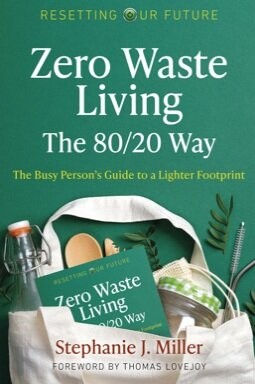
To learn more of Stephanie’s tips on lessening your carbon and waste footprint, purchase her book, Zero Waste Living the 80/20 Way. You can learn more about her work by visiting her website, and on Instagram.
Faith Model is a writer based in Cody, Wyoming. Connect with Faith on Instagram.


Comments